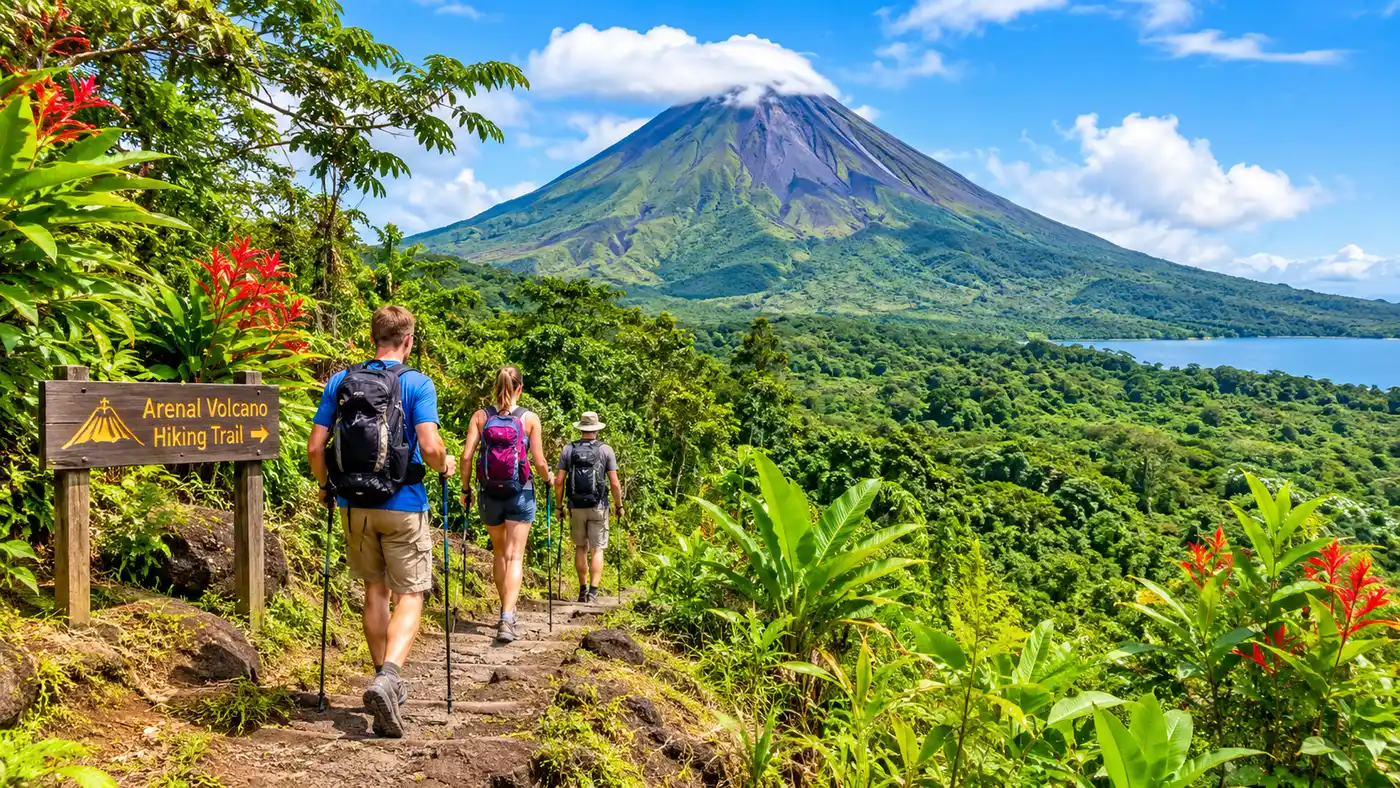
Arenal Volcano Hiking Guide: Best Trails and Guided Tours
Morning fog clings to the base of the cone like wet cotton. You step out onto the coarse black gravel, hear a troop of mantled howler monkeys grunting three ridges away, and realize that planning an arenal volcano hike comes with a dozen micro-decisions before you even lace up your shoes. Most travelers land in town assuming there is one main path tracing straight up to the smoking crater. That is not how it works here.
Climbing to the summit is strictly illegal because the peak remains geologically unpredictable and toxic gases pool near the vents. Instead, an arenal volcano hike costa rica experience takes you around the base across ancient lava fields, dense secondary rainforest, and regeneration zones scarred by the cataclysmic 1968 eruption. You have the official state-managed park, several private reserves flanking the boundaries, hanging bridges, and riverbeds. Picking the right arenal hike depends on whether you care more about jagged volcanic rock underfoot, deep forest birding, or unobstructed volcano views without tour bus crowds.
Book your arenal volcano tours experience:
Choosing Your Route: Comparing Arenal Volcano Hiking Trails
The geography around La Fortuna confuses people. You will see brochures advertising an arenal volcano national park hike right next to flyers for private reserves, and locals will use names interchangeably. There are essentially two official national park sectors plus several privately owned ecological parks that sit right against the park boundary. Each property charges a separate admission fee and maintains distinct trail networks.
The state-run park is divided into Sector Volcán and Sector Peninsula. Sector Volcán has the classic lava flow trails you see on postcards, weaving through regenerating forest into the open rubble field from the 1992 eruption. Sector Peninsula sits further south along Lake Arenal, featuring paved pathways, an observation tower, and sweeping water views. It is peaceful and accessible, though it feels less like raw wilderness.
Directly adjacent to the national park sits the Arenal 1968 reserve. It is private land, costs a bit more to enter, but offers some of the highest panoramic viewpoints of the western face of the volcano and Lake Arenal. The walking surface is steeper and rougher than the national park, which keeps casual strolls to a minimum. Further east, reserves like El Silencio provide quiet forest walks through primary jungle where wildlife sightings often outpace the volcano scenery.
| Trail System | Distance | Terrain | Entrance Cost | Best For |
|---|---|---|---|---|
| Arenal National Park (Sector Volcán) | 5.5 km network | Flat gravel, volcanic rocks, forest roots | $17 USD (approx.) | Historic lava flows, huge trees, classic views |
| Arenal National Park (Sector Peninsula) | 3.5 km network | Paved trails, boardwalks, gentle slopes | Included with Volcán ticket | Lake views, accessible walking, birdwatching |
| Arenal 1968 Private Reserve | 4.5 km to 7 km | Loose lava rock, dirt climbs, exposed ridges | $25 USD | Elevated viewpoints, rugged hiking, sunset views |
| Mirador El Silencio | 8 km network | Jungle paths, mud, moderate grades | $10 USD | Solitude, dense birdlife, budget hikers |
If you have only one morning, the choice usually comes down to Sector Volcán inside the national park versus the Arenal 1968 reserve. You can hike both in a day if your knees handle loose rocks well, but doing one thoroughly is usually more rewarding.
Arenal Volcano National Park Hike: Sector Volcán and Sector Peninsula
The primary arenal volcano national park hiking trails begin at the Sector Volcán ranger station, roughly 20 minutes driving west of La Fortuna. Two main paths dominate this sector: Sendero Las Coladas and Sendero El Ceibo. Las Coladas stretches for about 1.7 kilometers along flat, sandy ground flanked by tall switchgrass and young trees before climbing a steep, crude staircase cut into the 1992 lava flow. The vista from the top plateau spreads across the open cone on one side and Lake Arenal on the other.
From the base of the lava ridge, the El Ceibo trail loops deeper into old-growth canopy. The air cools down ten degrees the moment the canopy closes overhead. The centerpiece of this three-kilometer loop is a monumental Ceiba pentandra tree, estimated to be well over 400 years old. Its massive fluted buttresses survived the massive 1968 explosion, towering over sixty meters above the ferns. Wandering among these roots feels primitive, especially when the cicadas kick up their shrill afternoon buzz.
Pro tip: Start your morning hike by 7:30 AM before the cloud deck lowers over the peak; by 11:00 AM, the crater rim usually disappears behind thick white fog for the rest of the day.
Drive two kilometers south down the gravel road to reach Sector Peninsula on the same day. Your ticket covers both sectors if visited during the same calendar day. The main trail here, Sendero Los Miradores, winds along Lake Arenal on smooth, universal-access concrete. At the end of the point stands a multi-tiered wooden viewing tower. You get panoramic lines of sight across the water to the green islands, and the shoreline trees are reliable territory for spotting toucans, crested guans, and coatis rooting through fallen leaves.
Note: Cash is not accepted at the official national park entrance booth. Check our guide on booking your park entry beforehand to avoid getting turned away at the gate.
Sector Peninsula stays much quieter than Sector Volcán. If you crave unhurried steps without dodging large tour groups with selfie sticks, it is worth the extra half-hour stop.
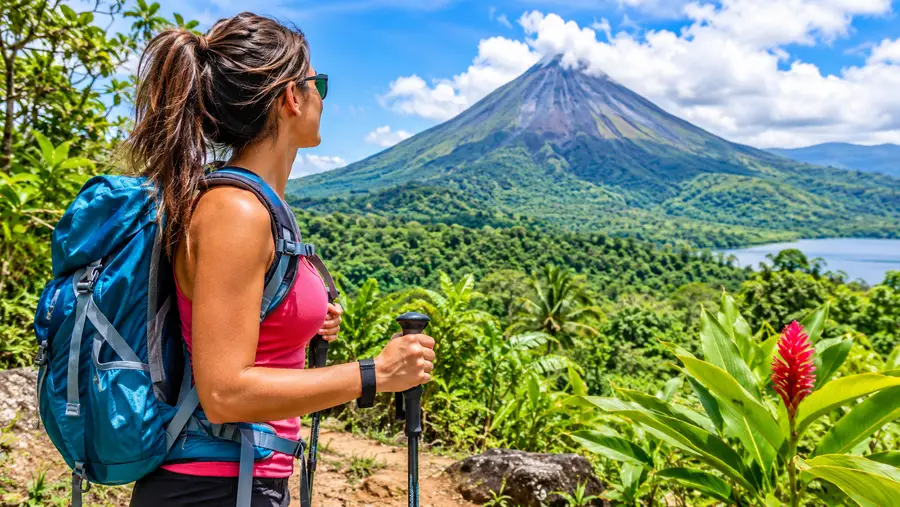
Arenal 1968 Volcano Trail: The Best Private Reserve Arenal Hike
When the volcano roared back to life on the morning of July 29, 1968, three villages were buried in ash and pyroclastic debris. The western slopes caught the brunt of the devastation. Today, the private reserve named after that fateful year lets you hike directly across that historic scar. The arenal 1968 volcano trail network holds two connected loops: the Trail of the Lava Flow 1968 (Colada 1968) and the Forest 1968 Trail (Bosque 1968).
Colada 1968 covers about four kilometers out and back. It takes you across high, windswept ridges formed entirely of shattered basalt boulders. Unlike the national park paths, which stay relatively low, the 1968 trails gain serious elevation along the side of the mountain. You climb over coarse volcanic slag where stunted ferns and orchids fight for root space. The black rocks absorb heat fast. By noon, the radiant heat rising off the trail can feel oppressive, but the panoramic views looking back at Lake Arenal and up into the crater are arguably the most dramatic in the valley.
Bosque 1968 branches off deeper toward Lake Los Patos, a quiet volcanic lagoon formed after the eruption. This trail stretches close to seven kilometers total and takes about three hours to finish. You spend half your time scrambling over jagged rock fields and the other half ducking under moss-covered rainforest branches where spider monkeys feed on wild figs. Honestly, if you want a more physically engaging costa rica volcano hike with rougher terrain, this private reserve beats the national park.
The facility itself feels commercialized near the entrance, featuring a large parking lot, clean restrooms, and a paved cafe overlooking the ridge. Do not let that fool you. Once you cross the cow gate onto the trail proper, the footpaths are genuine mountain tracks with loose stones that demand stable ankles.
Book your arenal volcano tours experience:
Volcano Hiking Tours vs. Self-Guided Arenal Hiking
A frequent debate among travelers visiting La Fortuna is whether to pay for a guide or wander the trails alone. Both approaches work, but they deliver completely different days on the mountain. Hiking arenal solo allows you to linger at viewpoints as long as you want, skip crowded resting benches, and walk at your own rhythm without waiting on someone struggling with elevation.
A guided arenal volcano hike tour shifts the focus from simple walking to wildlife identification and geological history. Volcanic landscapes look fascinating on their own, but an experienced naturalist will point out things your eyes will skate past: eyelash pit vipers curled on broad heliconia leaves, tiny strawberry poison dart frogs hidden in leaf litter, and medicinal tree saps. Guides carry heavy spotting scopes on carbon-fiber tripods. Looking through a 60x lens brings the eye of a sleeping two-toed sloth twenty meters up into pin-sharp focus.
Most volcano hiking tours combine several stops into a full itinerary. A popular formula pairs a morning walk through the national park or 1968 reserve with an afternoon swim beneath the La Fortuna Waterfall, followed by dinner and soaking in local hot springs heated by the volcano's magma chambers. If you lack a rental car, booking a guided arenal volcano hiking tour makes logistical sense because round-trip transport from La Fortuna hotels is almost always baked into the rate.
- Guided tours suit: first-time visitors, wildlife photographers, travelers without rental vehicles, and those wanting historical context.
- Self-guided hikes suit: seasoned hikers, budget travelers, people seeking quiet wilderness, and anyone on an unpredictable daily schedule.
- Average tour cost: approximately $65 to $110 USD per person including transportation, entry fees, and bilingual guide service.
- Self-guided cost: simply the admission fee ($17 for the national park or $25 for Arenal 1968) plus your own rental car fuel or taxi fare.
If you choose to hire someone on the spot, ensure they are certified by the Costa Rican Tourism Board (ICT). You will find freelance guides lingering near the national park gates, but quality varies wildly. Booking ahead through a reputable outfit saves you from haggling on the dirt roadside.
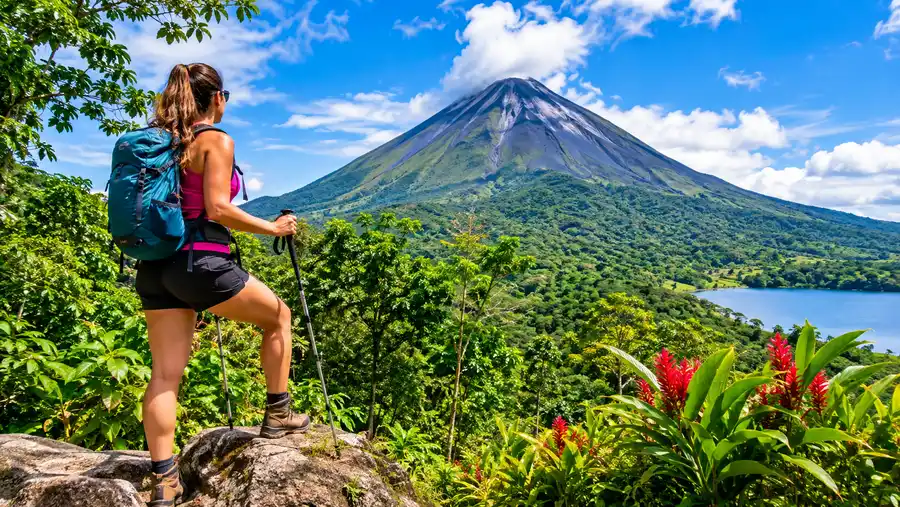
Practical Tips for Hiking Arenal Volcano
Weather dictates everything around the volcano. La Fortuna sits in a transition zone between the dry Pacific interior and wet Caribbean lowlands. It can pour rain for three hours, dry out completely under blistered sunshine, and cloud over again before dinner. You cannot trust weather apps here; they show rain icons every single day of the year regardless of reality.
Preparation makes the difference between an incredible morning and a miserable trudge through slippery red mud. Footwear matters more than you might think. Flip-flops and flimsy running shoes have no place on the arenal trails. Sharp lava rocks shred thin canvas, and wet clay turns worn sneaker treads into bowling balls.
- Footwear choices: wear closed-toe hiking shoes or trail runners with aggressive rubber lugs.
- Rain preparation: stash a lightweight waterproof shell or poncho inside your pack even if the sky looks pristine when you depart.
- Insect defense: apply DEET or lemon eucalyptus spray around your ankles and knees where chiggers and seed ticks hang out in tall grass.
- Hydration needs: carry at least 1.5 liters of clean water per person; humidity levels make you sweat twice as fast as temperate mountain climbs.
- Sun protection: pack sunscreen and a wide-brim hat for the exposed lava flows where shade trees do not exist.
Cell reception is spotty once you drop into the ravines behind the western lava walls. Download offline maps via Maps.me or Google Maps before pulling out of La Fortuna. The trails in both major parks are marked clearly with numbered wooden posts, making navigation straightforward, but having offline GPS gives peace of mind if you wander onto secondary loops.
Plan your rest stops carefully. Sitting on bare volcanic boulders sounds picturesque until you realize fire ants often nest beneath the warm stones.
Frequently Asked Questions about arenal volcano hike
Can you hike to the top of Arenal Volcano?
No, hiking to the crater summit is illegal and dangerous. The trail was permanently closed after the 1968 explosion, and park rangers enforce strict fines for trespassers due to unstable rock faces and toxic sulfur fumes.
How difficult is an arenal hike for average walkers?
Most trails in the national park are rated easy to moderate with minimal elevation change. The Arenal 1968 trail and Mirador El Silencio feature steeper, rockier sections that require moderate fitness and steady balance.
Which is better: Arenal Volcano National Park or Arenal 1968?
Arenal 1968 offers higher vantage points, better lake views, and rougher hiking terrain across raw lava rubble. Arenal Volcano National Park features better old-growth rainforest, the giant 400-year-old Ceiba tree, and cheaper entry fees.
What animals will I see while hiking arenal?
Sightings vary by hour and trail traffic, but hikers regularly spot white-nosed coatis, howler monkeys, toucans, wild turkeys, eyelash vipers, and agoutis. Hiring a guide with a spotting scope dramatically increases your chances of spotting sloths high in the canopy.
Quick Reference
- Summit access: strictly prohibited by Costa Rican law
- Park hours: 8:00 AM to 4:00 PM daily
- Park entry cost: $17 USD (online booking only)
- Average hike time: 2 to 3.5 hours
- Required gear: sturdy footwear and rain protection
Book your arenal volcano tours experience:
Before You Tie Your Boots
Standing on hardened volcanic stone that rolled down the mountain just decades ago puts human scale into sharp focus. Take your time, hit the trailheads early before the mountain hides behind cloud cover, and leave space in your afternoon plans for a slow soak in the hot springs down the road. Book your park passes online, lace up your sturdiest boots, and go experience one of the planet's most iconic volcanic landscapes firsthand.
Read more about arenal volcano tours.